Last verified: October 2026
On 29 September 2026 the Kenya National Highways Authority (KeNHA) gave everyone occupying the road reserve along four highways 30 days to clear out. The roads are Likoni to Lunga Lunga, Kilifi to Malindi to Garsen to Witu, Maili Tisa to Kitale, and Eldoret to Nyaru. The deadline is 29 October. After that, KeNHA removes whatever is left and sends the owner the bill.
None of this is new. The same agency issued a notice on the Kisii, Kadongo and Ahero road on 28 May, and the bulldozers arrived in mid July at Nyamataro, Nyakoe, Misambi and Kadongo. If you own land near a road, or you are about to buy some, check the boundary before you pay a deposit.
Before you start: a title deed does not say how far your parcel sits from the road. Ask the seller for the deed plan and the survey plan, then have a licensed surveyor measure from the beacons to the road.
What a road reserve is
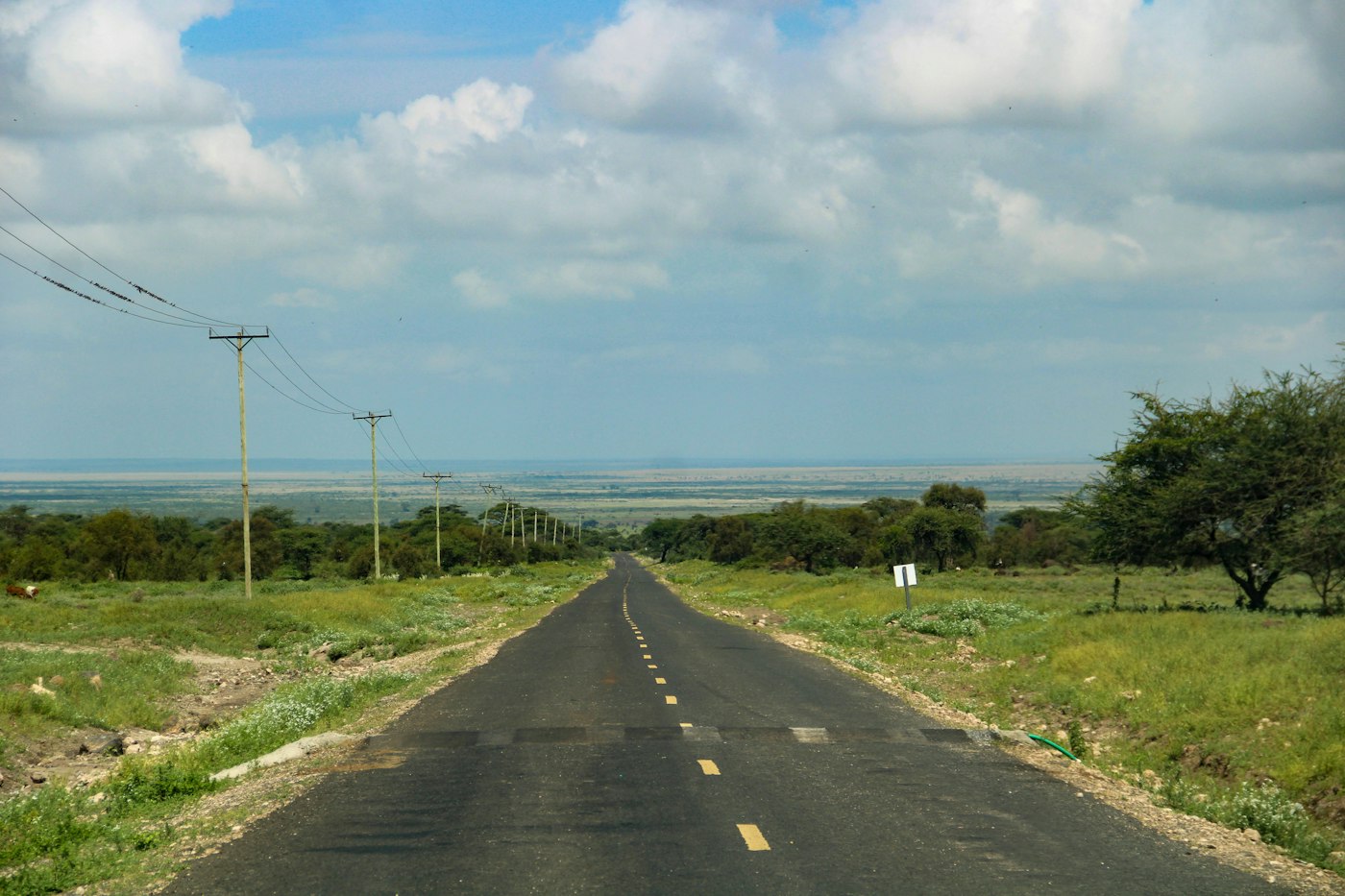
A road reserve is the strip of land on both sides of a road that belongs to the public, not to the neighbouring plot owner. It holds the carriageway and also drainage, service roads, bus bays and room for future widening. Fencing it, farming it or building a kiosk on it for thirty years does not turn it into private land.
The tricky part is that the reserve is often wider than the tarmac suggests. A plot can look set back from the road and still have its whole frontage inside the reserve.
How wide it is
The Kenya Roads Act, 2007 does not fix a width for each class of road. The numbers come from design standards and from what has been gazetted for your stretch of road. The Ministry of Transport’s 2016 Road Design Manual, for example, lists 40 to 60 metres for major rural arterial roads and 9 to 20 metres for local roads, with narrower figures in towns.
Treat those as a rough guide only. The width that counts is the one the road authority holds for that exact section, so ask for it in writing. KeNHA looks after national trunk roads, the Kenya Rural Roads Authority (KeRRA) looks after rural roads, the Kenya Urban Roads Authority (KURA) handles major urban roads, and counties handle the rest.
What the law lets KeNHA do
Section 49 of the Roads Act says nobody may put up a structure on or over a road reserve without the road authority’s written permission. If someone does, the authority can serve a notice to remove it. The notice period cannot be shorter than 30 days. When that time runs out, the authority can remove the structure itself and recover the cost from the owner. Breaking the rule is also an offence, punishable by up to one year in prison, a fine of up to Ksh 100,000, or both.
That is why the September notice reads the way it does. KeNHA has also said publicly, in reports from June 2026, that compensation rules cover approved road works and not the removal of structures built without permission. If your shop, wall or gate sits inside the reserve, expect no payment.
A different process: compulsory acquisition
Do not confuse a road reserve eviction with compulsory acquisition. When the government needs private land for a new project, the National Land Commission (NLC) publishes a notice in the Kenya Gazette, holds a public inquiry, and the owner is entitled to compensation under the Land Act, 2012.
On 25 September 2026 the NLC gazetted fresh notices for parcels in Kajiado (Nairobi to Naivasha SGR Phase 2A), Kiambu, Nyeri and Migori. The inquiry dates differ by project and run from mid October to late November. Landowners are asked to bring ID, ownership documents, bank details and a written compensation claim. If a notice names your parcel, go to the inquiry. I would rather lose a morning than lose a claim.
How to check before you buy
- Order an official search. It shows the registered owner and any cautions or charges. It will not show a road reserve, so this is the first step and not the last. Our guide to verifying a title deed on Ardhisasa walks through it.
- Get the deed plan and survey plan. These show the boundary dimensions and where the parcel sits against the adjoining road. If the seller stalls on producing them, treat that as a warning on its own. See deed plans and registry index maps.
- Hire a licensed surveyor to find the beacons. Paper records lag behind the ground. Ask the surveyor to measure from the beacons to the edge of the carriageway and to compare that with the reserve width the road authority gives you.
- Write to the road authority. Give the parcel number and the road name. Ask for the gazetted reserve width and whether any widening, bypass or new corridor is planned along that stretch.
- Ask the county physical planning office. County plans show approved and proposed roads, rail and utility corridors that an old survey plan will not.
- Search recent Kenya Gazette notices. Compulsory acquisition notices are published there before the inquiry. If your parcel is on a named corridor, look for the route and the county.
If you already own land inside a reserve
Start by finding out exactly where the line is. Get the reserve width in writing from the road authority and have a surveyor mark your boundary against it. If you built with permission, find the approval letter and keep copies.
If you have received a notice, the 30 days are the only window you can count on. Do not wait for the deadline to speak to an advocate. A lawyer can tell you whether you have grounds to challenge the notice or negotiate an arrangement, and that advice is worth far more before the bulldozer arrives than after.
Watch out for: a seller who says the land has never had a problem
Reserve lines change and old beacons move. A calm seller is not a survey. Check the boundary yourself before you pay, and get the reserve width from the road authority, not from the person selling. This guide is general information, not legal advice.
Frequently asked questions
How do I find out if my road is on the current KeNHA notice?
The September notice names four roads: Likoni to Lunga Lunga, Kilifi to Malindi to Garsen to Witu, Maili Tisa to Kitale, and Eldoret to Nyaru. If your plot is on one of them, assume the deadline of 29 October applies. For any other road, ask KeNHA directly whether a notice or a widening plan covers your section.
Can KeNHA remove my structure without paying me?
Yes, if it stands in the road reserve without written permission. Section 49 of the Roads Act allows removal after at least 30 days’ notice and lets the authority recover the cost from you. Compensation for acquired land is a separate process and applies to land you legally own outside the reserve.
Does my title deed show a road reserve?
Usually not. A title and a search show ownership and registered encumbrances. They do not measure the distance to the road. Only the survey plan and a physical measurement against the gazetted reserve width show that.
What should I do first if the NLC sends me an acquisition notice?
Note the inquiry date and venue and plan to attend in person. Gather your title or lease, the survey plan, your ID and bank details, and a written claim for compensation. An independent valuation helps if the award is disputed later.
Who do I ask about a road that is not a national highway?
Rural roads fall under KeRRA, major urban roads under KURA, and county roads under the county roads department. The county physical planning office can also tell you about planned corridors that are not built yet.
Is a road reserve the same as a riparian reserve?
No. A road reserve protects the road. A riparian reserve protects a river or lake shore and has its own rules. A plot near both needs both checks.
See also: Title Numbers and Parcel Numbers in Kenya, How to Verify a Title Deed in Kenya via Ardhisasa, What to Expect From a Licensed Surveyor in Kenya, How to Do a Land Search in Kenya, How Land Registries in Kenya Are Organized.
Sources: The Star on the KeNHA notice, Kenya Roads Act, 2007, Kenyans.co.ke on the NLC notices.
Paul researched Kenya’s land verification process in depth to build this guide, drawing on Ardhisasa’s official documentation and Kenya’s land registration regulations. Questions or corrections: admin@landtitlehub.co.ke.
Riparian reserves are checked the same way as road reserves. See our guide on how to check if your property is on riparian land in Kenya if your plot is near a river or lake instead.